7 Reasons Why You Need Customer Feedbacks for Your Business

7 Reasons Why You Need Customer Feedbacks for Your Business

Customer feedback serves as a compass guiding companies toward success and growth. From shaping product development to refining marketing strategies, it plays a pivotal role in driving business success. In this blog post, we’ll explore seven compelling reasons why customer feedback is essential for your business and how it can help you thrive in today’s highyly demandind and competitive landscape. 1. Insight into Customer Needs Customer feedback provides invaluable insight into the needs, preferences, and pain points of your target audience. By listening to your customers, you gain a deeper understanding of their wants and desires, allowing you to tailor your products or services to better meet their expectations. 2. Identifying Areas for Improvement Feedback highlights areas where your business may be falling short or where there is room for improvement. Whether it’s product quality, customer service, or website usability. It also helps you identify areas that require attention and refinement, driving continuous improvement. 3. Enhancing Customer Experience Listening to feedback from your customers allows you to identify opportunities to enhance the overall customer experience. By addressing customer concerns, implementing suggested improvements, and responding promptly to feedback, you demonstrate your commitment to customer satisfaction and loyalty. 4. Innovation and Differentiation Customer feedback can inspire innovation and drive differentiation in your products or services. By listening to customer suggestions and ideas, you can identify new features, offerings, or enhancements that set your business apart from competitors and meet evolving customer needs. 5. Building Trust and Loyalty Actively soliciting and responding to feedback from your customers helps to build trust and credibility with your audience. By demonstrating transparency, openness, and a willingness to listen, you foster stronger customer relationships and increase loyalty over time. 6. Refining Marketing Strategies Feedback provides valuable insights into the effectiveness of your marketing strategies and campaigns. Understanding how customers perceive your brand, messaging, and promotional efforts allows you to refine your marketing approach and allocate resources more effectively to drive better results. 7. Driving Business Growth Ultimately, feedbacks are essential for driving business growth and success. By continuously listening to and acting on customer feedbacks, you can adapt to changing market dynamics, meet evolving customer expectations, and position your business for long-term success and sustainability. In conclusion, customer feedback is not just valuable—it’s essential for the growth and success of your business. By actively soliciting, listening to, and acting on customer feedback, you can better understand your customers, improve your products and services, enhance the customer experience, and ultimately drive business growth. Start leveraging the power of customer feedback today to take your business to new heights of success.

7 Reasons Why You Need Customer Feedbacks for Your Business Read Post »

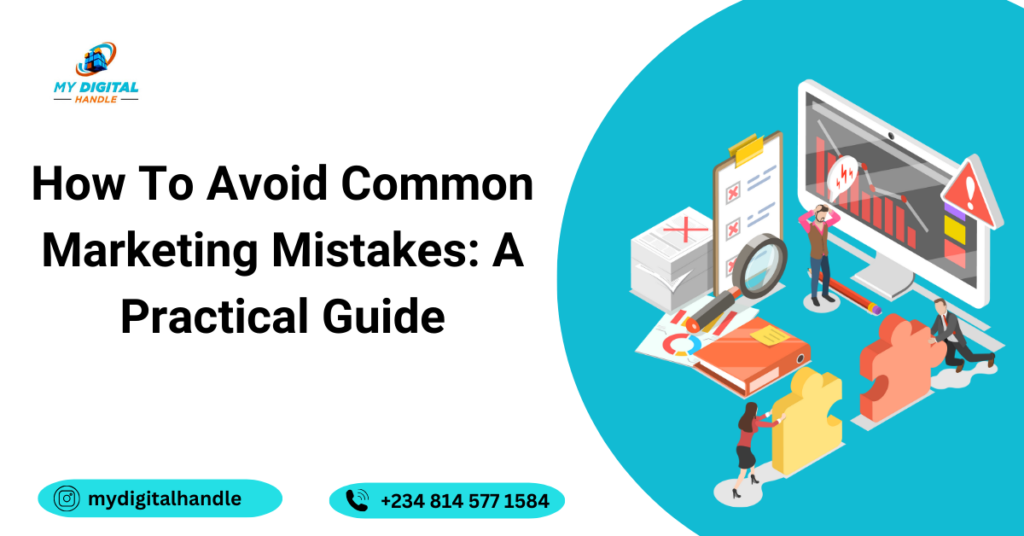
How To Avoid Common Marketing Mistakes: A Practical Guide

In the fast-paced world of digital marketing, businesses often encounter various challenges that can hinder their success. While it’s essential to acknowledge these common marketing mistakes, it’s equally important to delve deeper into each issue and provide actionable advice for improvement. Let’s critically analyze some of these marketing mistakes and explore practical strategies to avoid them effectively Neglecting Target Audience Research: Going Beyond Demographics Understanding the target audience is undeniably crucial, but businesses often fall short by merely scratching the surface of demographic data. For instance, a company selling fitness products might identify its target audience as “young adults aged 18-35.” However, a deeper dive into psychographics reveals that this audience segment comprises both fitness enthusiasts and beginners with varying motivations and preferences. By conducting comprehensive research encompassing psychographics, pain points, and buying behaviors, businesses can tailor their marketing efforts more effectively to resonate with their audience on a deeper level. Ignoring SEO Best Practices: Adapting to Constant Changes Search engine optimization (SEO) is a multifaceted discipline that goes beyond basic keyword optimization. While it’s essential to optimize website content and meta tags, businesses often overlook the importance of off-page SEO factors such as backlink building and technical optimization. Additionally, search engine algorithms are constantly evolving, requiring businesses to stay updated and adapt their strategies accordingly. For example, Google’s recent emphasis on user experience metrics such as Core Web Vitals highlights the importance of optimizing website performance for better search rankings. Overlooking Content Quality: Consistency and Diversity While creating high-quality content is paramount, businesses must also prioritize consistency and diversity in their content strategy. For instance, a company might produce informative blog posts but neglect other content formats such as videos, infographics, or podcasts. By diversifying content formats and maintaining a consistent publishing schedule, businesses can keep their audience engaged across different platforms and capture their attention more effectively. and avoid making this common marketing mistakes Inconsistent Branding: Maintaining Cohesion Across Channels Inconsistency in branding can dilute brand equity and confuse customers. For example, a business might use different logos, color schemes, or messaging across various marketing channels, leading to a fragmented brand identity. By maintaining cohesive branding elements such as logos, colors, and tone of voice across all channels, businesses can reinforce brand recognition and build stronger connections with their audience. Ignoring Social Media Engagement: Quality Over Quantity While social media engagement is essential, businesses often prioritize quantity over quality when interacting with their audience. For instance, they might focus on increasing follower counts or posting frequency without considering the relevance or value of their content. Instead, businesses should focus on creating meaningful interactions and providing valuable content that resonates with their audience’s interests and needs. Overlooking Mobile Optimization: Prioritizing User Experience With the prevalence of mobile devices, neglecting mobile optimization can lead to a poor user experience and lost opportunities for engagement and conversions. For example, a website with slow loading times or unresponsive design on mobile devices can frustrate users and drive them away. By prioritizing mobile optimization and ensuring a seamless browsing experience across all devices, businesses can improve user satisfaction and retention. Not Tracking and Analyzing Metrics: Setting Clear Objectives While tracking metrics is essential, businesses often fail to set clear objectives and key performance indicators (KPIs) to measure their success. For instance, they might track metrics such as website traffic or social media followers without tying them to specific business goals. By setting SMART (Specific, Measurable, Achievable, Relevant, Time-bound) objectives and aligning them with relevant KPIs, businesses can effectively measure their progress and make data-driven decisions to optimize their marketing strategies. Ignoring Online Reviews and Reputation Management: Proactive Engagement While reputation management is crucial, businesses often adopt a reactive approach, only addressing negative reviews or feedback when they arise. For example, they might neglect positive reviews or fail to actively solicit feedback from satisfied customers. By proactively engaging with customers, soliciting positive reviews, and addressing feedback promptly and professionally, businesses can build a positive online reputation and strengthen customer trust and loyalty. Relying Solely on Paid Advertising: Balancing Resources While paid advertising can yield immediate results, businesses often overlook the importance of diversifying their marketing efforts and investing in organic channels. For instance, they might allocate a significant portion of their budget to paid campaigns without exploring content marketing, SEO, or social media marketing. By balancing resources and adopting a holistic approach to marketing, businesses can maximize their reach, optimize their ROI, and achieve long-term sustainability. Lack of Adaptability and Innovation: Embracing Change Finally, businesses must be adaptable and innovative in the face of constant technological advancements and evolving consumer behaviors. For example, they might resist adopting new marketing trends or technologies out of fear of change or complacency with existing strategies. By embracing change, staying informed about industry trends, and fostering a culture of innovation, businesses can stay ahead of the curve and remain competitive in today’s dynamic market landscape. In conclusion, while it’s essential to recognize common marketing mistakes, it’s equally important to delve deeper into each issue and provide actionable strategies for improvement. By addressing these challenges head-on and adopting a proactive and strategic approach to marketing, businesses can overcome obstacles, unlock growth opportunities, and achieve long-term success in today’s competitive marketplace.


How To Avoid Common Marketing Mistakes: A Practical Guide Read Post »

Unlocking Growth: 10 Strategies to Boost Sales and Marketing Success

Unlocking Growth: 10 Strategies to Boost Sales and Marketing Success

Driving sales and marketing success is essential for sustainable growth and profitability. Whether you’re a seasoned entrepreneur or a budding startup, implementing effective strategies to increase sales and expand your market reach is paramount. In this blog post, we’ll delve into ten actionable tactics to unlock growth and elevate your sales and marketing efforts. Understanding Your Target Audience To effectively market your products or services, it’s crucial to understand your target audience’s needs, preferences, and pain points. Conduct thorough market research to gain insights into their demographics, behaviors, and purchasing habits. Tailor your marketing messages and offerings to resonate with your audience’s specific needs and desires. Crafting Compelling Value Propositions A compelling value proposition is the foundation of successful sales and marketing. Clearly communicate the unique benefits and advantages of your products or services to potential customers. Highlight what sets you apart from competitors and emphasize the value customers will receive by choosing your business. Implementing Multi-Channel Marketing Diversify your marketing efforts across multiple channels to reach a wider audience and maximize your impact. Utilize a combination of online and offline channels, including social media, email marketing, content marketing, search engine optimization (SEO), and traditional advertising. Tailor your messaging and content to each channel to effectively engage your target market. Enhancing Your Online Presence Your website serves as the digital storefront for your business. Ensure it is user-friendly, visually appealing, and optimized for search engines. Utilize persuasive copywriting, compelling imagery, and clear calls-to-action to guide visitors through the sales funnel. Leverage social media platforms to engage with your audience, share valuable content, and promote your products or services. Offering Irresistible Deals and Promotions Create enticing offers, discounts, or promotions to incentivize customers to make a purchase. Limited-time deals, exclusive discounts for loyal customers, and bundled packages can help drive sales and encourage repeat business. Monitor the performance of your promotions and optimize your strategies based on customer feedback and sales data. Providing Exceptional Customer Service Exceptional customer service is key to building long-term relationships and fostering customer loyalty. Respond promptly to inquiries, address customer concerns or complaints with empathy and professionalism, and go above and beyond to exceed customer expectations. Positive experiences can lead to repeat purchases and valuable word-of-mouth referrals. Implementing Upselling and Cross-Selling Strategies Encourage customers to purchase additional products or services by offering relevant upsells or cross-sells during the checkout process. Highlight complementary products or upgrades that enhance the value of their purchase and provide additional benefits. Personalize recommendations based on customer preferences and purchase history to maximize upsell and cross-sell opportunities. Cultivating Trust and Relationships Build trust and rapport with your customers by being honest, transparent, and reliable. Communicate openly, deliver on your promises, and provide value beyond the sale. Engage with your audience through meaningful interactions, actively listen to their feedback, and demonstrate your commitment to their satisfaction. Collecting and Acting on Customer Feedback Solicit feedback from your customers through surveys, reviews, or direct communication channels. Use this valuable insight to identify areas for improvement, address any issues or concerns, and refine your products or services to better meet customer needs. Continuously seek feedback to drive continuous improvement and enhance the customer experience. Measuring and Analyzing Performance Regularly monitor and analyze sales data, marketing metrics, and customer behavior to evaluate the effectiveness of your strategies. Identify trends, patterns, and opportunities for optimization, and make data-driven decisions to drive growth and success. Continuously iterate and refine your sales and marketing efforts to stay ahead of the competition and maximize your business’s potential. In conclusion, implementing these ten strategies can help you unlock growth and elevate your sales and marketing success. By understanding your audience, crafting compelling value propositions, and implementing multi-channel marketing tactics, you can expand your market reach, drive sales, and achieve sustainable growth in your business. Stay proactive, agile, and customer-focused, and watch your business flourish in today’s competitive marketplace.

Unlocking Growth: 10 Strategies to Boost Sales and Marketing Success Read Post »

Mastering Local SEO: 10 Hacks to Dominate Your Local Market

Mastering Local SEO: 10 Hacks to Dominate Your Local Market

In today’s digital age, local businesses face fierce competition for visibility and customers. With consumers increasingly relying on the internet to discover local products and services, mastering local SEO (Search Engine Optimization) is essential for businesses looking to thrive in their local markets. In this blog post, we’ll explore ten powerful local SEO hacks to help you dominate your local market and attract more customers to your business. 1. Optimizing Your Google My Business Listing Your Google My Business (GMB) listing is the cornerstone of your local online presence. Ensure it’s fully optimized with accurate business information, including your name, address, phone number, and business hours. Encourage satisfied customers to leave positive reviews to boost your credibility and rankings in local search results. 2. Localized Keyword Research Conduct keyword research with a local focus to identify high-value keywords and phrases relevant to your business and location. Incorporate these keywords naturally into your website content, meta tags, and headings to improve your visibility in local search queries. 3. Creating Localized Content Develop content that resonates with your local audience by featuring local events, landmarks, and community initiatives. Showcase your involvement in the local community through blog posts, case studies, and customer testimonials to establish trust and rapport with local consumers. 4. Ensuring NAP Consistency Consistency is key when it comes to your business’s name, address, and phone number (NAP) information across all online platforms. Make sure your NAP information is consistent across your website, social media profiles, and local directories to avoid confusing search engines and potential customers. 5. Building Local Citations and Backlinks Build local citations and acquire backlinks from authoritative local websites and directories relevant to your industry. Partner with local businesses, sponsor local events, and participate in community outreach programs to earn valuable backlinks and boost your local authority. 6. Localized On-Page Optimization Optimize your website’s on-page elements, such as titles, meta descriptions, and headers, with localized keywords and location-specific information. Create dedicated landing pages for different service areas to effectively target local search queries and improve your local search rankings. 7. Providing a Mobile-Friendly Experience Optimize your website for mobile devices to ensure a seamless and user-friendly experience for local consumers searching on smartphones and tablets. Fast loading times, clear navigation, and clickable contact information are essential for facilitating conversions on mobile devices. 8. Managing Online Reviews Monitor and manage online reviews across various platforms, including Google, Yelp, and Facebook. Encourage satisfied customers to leave positive reviews and respond promptly and professionally to negative feedback to demonstrate your commitment to customer satisfaction. 9. Implementing Local Schema Markup Implement schema markup on your website to provide search engines with structured data about your business, such as your name, address, phone number, and operating hours. This can improve your visibility in local search results and enhance your listing’s appearance with rich snippets. 10. Targeting Hyperlocal Keywords Target hyperlocal keywords and long-tail phrases that include neighborhood names, landmarks, and specific geographic areas. Tailor your content and marketing efforts to address the unique needs and preferences of local consumers in each target location. By implementing these ten local SEO hacks, you can position your business as a prominent player in your local market and attract more customers from your surrounding community. Stay proactive, monitor your progress, and adapt your strategies to stay ahead of the competition and maximize your business’s local visibility and success!

Mastering Local SEO: 10 Hacks to Dominate Your Local Market Read Post »

10 SEO Best Practices to Boost Your Website's Ranking

Mastering SEO: 10 SEO Best Practices to Boost Your Website’s Ranking

In the fast-paced digital realm, where the online marketplace is brimming with competition, achieving visibility and prominence for your website is crucial. Fortunately, amidst the complexities of search engine algorithms and evolving user behaviors, there exist concrete strategies that can propel your website to the forefront of search engine results pages (SERPs). In this comprehensive guide, we’ll explore ten indispensable SEO best practices and strategies that are proven to enhance your website’s ranking and drive organic traffic. 1. High-Quality Content: The Foundation of Success Content reigns supreme in the realm of SEO. Crafting content that is not only informative and valuable but also resonates with your target audience is paramount. By addressing their needs, concerns, and interests, you establish authority within your niche and foster trust among your audience. 2. Keyword Research: Unveiling Valuable Insights Keyword research forms the bedrock of any successful SEO campaign. By identifying relevant keywords and phrases that align with your content and your audience’s search intent, you can unlock valuable insights into their behavior and preferences. Keyword reseach is one of the many fool proof SEO best practices that you need to turn your website around. 3. On-Page Optimization: Fine-Tuning Your Digital Assets Optimize your web pages for search engines by strategically placing keywords in titles, meta descriptions, headings, and throughout your content. Structuring URLs in a descriptive and keyword-rich manner enhances visibility and accessibility. 4. Mobile-Friendliness: Catering to the Mobile-First Era With the proliferation of mobile devices, ensuring your website is mobile-responsive is imperative. A seamless and intuitive user experience across all devices not only enhances engagement but also earns favor with search engines. 5. Page Speed Optimization: Accelerating Your Digital Journey Page speed is a critical factor in user experience and search engine ranking. Enhance loading times through optimization techniques such as image compression, minification of files, and leveraging content delivery networks (CDNs). 6. Backlink Building: Cultivating Authority and Trust Backlinks from authoritative websites signal credibility to search engines. Focus on acquiring high-quality backlinks through strategic outreach, content collaboration, and fostering relationships within your industry. 7. User Experience (UX) Optimization: Putting Users First A positive user experience is pivotal in reducing bounce rates and retaining visitors. Design your website with intuitive navigation, clear calls-to-action, and accessibility features to enhance usability and satisfaction. 8. Social Media Integration: Amplifying Your Reach Leverage social media platforms to amplify your content, expand your reach, and drive traffic to your website. Cultivate an engaged community by actively participating in conversations and sharing valuable insights. Maximiminsg social media and integrating different social media palrtforms into the SEO strategy is a very important stem and a well recomended SEO best practices for websites to gather organic visibility on different search engine platforms. 9. Schema Markup: Enhancing Search Visibility Implement schema markup to provide search engines with structured data about your content. Utilize schema markup for rich snippets to enhance search result features and improve click-through rates. 10. Regular Monitoring and Analysis: Driving Continuous Improvement Monitor key performance metrics using analytics tools to track changes in rankings, traffic, and user engagement. Continuously refine your SEO strategy based on data-driven insights and industry trends. In conclusion, mastering these ten essential SEO strategies is pivotal in elevating your website’s presence and achieving sustainable success online. By combining creativity with strategic execution and a commitment to continuous improvement, you can unlock the full potential of your website and outshine the competition in the digital landscape. Stay informed, stay agile, and watch your website soar to new heights of success.

Mastering SEO: 10 SEO Best Practices to Boost Your Website’s Ranking Read Post »

8 Comprehensive Strategies to Skyrocket Your Website's SEO Performance

8 Strategies to Skyrocket Your Website’s SEO Performance

In the dynamic world of digital marketing, mastering Search Engine Optimization (SEO) is paramount for achieving online success. With search engines continuously refining their algorithms and user behaviors evolving, implementing a robust Search Engine Optimisation strategy is essential for enhancing your website’s visibility and attracting organic traffic. Let’s delve into eight detailed strategies that can propel your website to the top of search engine results: 1. Exhaustive Keyword Research and Optimization: Keyword research serves as the cornerstone of Search Engine Optimisation. Utilize a combination of tools such as Google Keyword Planner, SEMrush, and Ahrefs to identify relevant keywords in your niche. Look for keywords with high search volume and low competition. Once you’ve compiled a list, strategically integrate these keywords into your website’s content, including titles, headings, meta descriptions, and body text. Aim for a natural incorporation of keywords to maintain readability and avoid keyword stuffing. 2. Elevate Content Quality and Relevance: Compelling content is the lifeblood of any successful Search Engine Optimisation strategies. Invest in creating high-quality, informative, and engaging content that resonates with your target audience. Regularly publish fresh content in various formats such as blog posts, articles, infographics, videos, and podcasts. Conduct thorough research to address relevant topics and provide valuable insights to your audience. Remember, quality content not only attracts visitors but also earns backlinks and improves your website’s authority in the eyes of search engines. 3. Optimize Website Structure and Navigation: A well-structured website not only enhances user experience but also facilitates search engine crawling and indexing. Organize your website’s architecture in a logical manner, ensuring easy navigation for both users and search engine bots. Use descriptive and SEO-friendly URLs for your pages, and create an XML sitemap to help search engines discover and index your content more efficiently. 4. Prioritize Mobile Optimization: With mobile devices accounting for a significant portion of web traffic, optimizing your website for mobile compatibility is non-negotiable. Adopt responsive design principles to ensure your website renders seamlessly across various screen sizes and devices. Test your website’s performance on mobile platforms regularly and optimize loading times to provide a smooth user experience. 5. Enhance Page Speed for Improved Performance: Page speed is a critical factor that influences both user experience and search engine rankings. Conduct a thorough audit of your website’s performance and identify areas for improvement. Optimize images by compressing them without compromising quality, minify CSS and JavaScript files, leverage browser caching, and utilize content delivery networks (CDNs) to distribute content more efficiently. A faster-loading website not only pleases visitors but also earns favor with search engines. 6. Cultivate a Diverse Backlink Profile: Backlinks remain a potent signal of a website’s authority and relevance. Focus on building a diverse portfolio of high-quality backlinks from reputable and relevant sources within your industry. Reach out to influencers, industry publications, and authoritative websites to earn natural backlinks through guest posting, collaborations, and content partnerships. Avoid black hat tactics such as buying links or participating in link schemes, as they can result in penalties from search engines. 7. Dominate Local SEO (if applicable): For businesses targeting local markets, optimizing for local search is paramount. Incorporate location-based keywords and phrases into your content, meta tags, and URLs. Create dedicated landing pages for each location served and optimize them with relevant information such as addresses, phone numbers, and business hours. Claim and optimize your Google My Business listing to improve your visibility in local search results and attract nearby customers. 8. Monitor, Analyze, and Iterate: Continuous monitoring and analysis are essential for refining and optimizing your Search Engine Optimisation strategy over time. Utilize tools like Google Analytics, Google Search Console, and third-party SEO platforms to track key metrics, monitor website performance, and gain insights into user behavior. Regularly audit your website for technical issues, broken links, and content gaps, and make necessary adjustments to stay ahead of the competition. By implementing these comprehensive strategies and remaining vigilant in your SEO efforts, you can position your website for sustained growth and success in the competitive online landscape. Remember, SEO is a marathon, not a sprint, and consistent effort and adaptation are key to achieving long-term results.

8 Strategies to Skyrocket Your Website’s SEO Performance Read Post »

why you need video content creation for your online business

Share With Friends On In today’s digital age, video content has emerged as one of the most powerful tools for businesses to reach and engage with their target audience. From social media to websites, video content has become an integral part of any successful marketing strategy. In this blog post, we will explore the reasons why video content creation is necessary for your business and how it can contribute to your overall growth. 1. Captivating Audience Engagement: Video content is highly effective in capturing the attention of your audience. As humans, we are naturally drawn to visuals and moving images. Incorporating video content into your marketing efforts enables you to convey your message in a more engaging and memorable way, fostering a stronger connection with your audience. Studies have shown that video content can increase user engagement and time spent on your website, leading to higher conversion rates. Click HERE to learn more about video marketing 2. Enhanced Brand Awareness: Utilizing video content creation helps to build and enhance brand awareness. When people watch your videos, they are exposed to your brand’s visuals, tone, and personality, leaving a lasting impression. Consistent and impactful video content can help establish your brand identity and make it more recognizable in a crowded digital landscape. Moreover, video content is easily shareable across various platforms, which can further expand your brand’s reach organically. 3. Boosting SEO Ranking: Search engines, such as Google, have started to prioritize video content in their search results. By incorporating video content into your website and social media channels, you can improve your SEO ranking and increase your online visibility. Including relevant keywords in video titles, descriptions, and tags can enhance your chances of appearing in search results for related queries. As a result, your business will be more discoverable to potential customers. 4. Effective Storytelling: Video content allows businesses to tell their brand story in a more dynamic and emotive manner. Whether it’s through customer testimonials, behind-the-scenes glimpses, or product demonstrations, videos provide an immersive experience that connects with viewers on a personal level. Effective storytelling can evoke emotions and build trust, ultimately driving viewers to take action, such as making a purchase or subscribing to your services. To know the best video for your business, click HERE. 5. Increased Social Media Engagement: Social media platforms have increasingly become video-centric spaces, where users consume and share video content more than any other type of content. By creating compelling and shareable videos, you can tap into the massive potential of social media marketing. Engaging videos have the potential to go viral, significantly expanding your business’s reach and attracting new customers. In conclusion, video content creation has become a crucial aspect of modern business marketing strategies. From boosting audience engagement and enhancing brand awareness to improving SEO rankings and effective storytelling, videos offer numerous benefits for your business’s growth. Embrace the power of video content creation to connect with your audience on a deeper level, stand out from the competition, and achieve long-term success in the digital realm. So, don’t wait any longer – it’s time to unleash the potential of video content for your business! Share With Friends On

why you need video content creation for your online business Read Post »

Scroll to Top